Spring 2026
The International Biogeography Society Newsletter
News from the Board...

Dear Biogeographers:

Welcome to the newsletter of The International Biogeography Society!

It would not be true to call this a “new” newsletter, because TIBS has produced them in the past. The new 2026-2028 TIBS Board felt that a rejuvenated newsletter, published every three months, would be a useful way to keep you informed about the Society and biogeography news in general, allowing us to give more detail on stories, upcoming events, articles and meetings than is possible via our BlueSky account, which we also encourage you to follow. We see the newsletter as an open initiative and collaboration, and so would like to hear your views on content - please email editor Marta Jarzyna, our VP for Public Affairs and Communications with your ideas.

The TIBS Board is elected every two years, and we have started our new term in January 2026, following the amazing Biennial meeting in Aarhus, Denmark, which many of you will have attended. Organising meetings and workshops for our members has been central to TIBS since its inception 25 years ago. The regular Biennial meetings, aiming to serve all biogeographers, have been the centrepiece, and our next will be in Beijing, China in January 2028 - our first biennial meeting in Asia! There have also been smaller, more thematic meetings, including some aimed specifically for early career biogeographers. Now that TIBS has celebrated its 25th birthday, we felt that it was time to carefully examine our meetings strategy to make it as global and inclusive as possible. A committee led by VP for Conferences, Mark Costello, will do that. Mark will soon circulate an online questionnaire to members to get your views on how meetings can work for you. We need to get as many responses as possible to guide our planning.

This newsletter covers some recently published articles in our Society Journal, Frontiers of Biogeography (FoB). TIBS launched FoB in 2009 to provide an independent forum for biogeographical science. The past two years have been an exciting time for FoB, with publication being transferred to the Pensoft platform, which brings substantial benefits, especially around visibility of papers. In addition, FoB has gained its first Clarivate impact factor of 2.5. On a personal note, I would also highlight the fantastic editorial work done by Chief Editor Rob Whittaker and his team. Several PhD students I have worked with have recently published articles in FoB and the review process is always extremely thorough and very fair, and most importantly it is done in the most supportive way for early career researchers who are learning about what can be a very tough world of peer review. Many of you will be aware of controversies in scientific publishing, including high article processing charges levied by big publishers who are of course getting editorial and reviewer expertise from the wider scientific community for nothing. FoB does have to charge an APC to cover costs of production, but TIBS members are eligible for a substantial discount and, in exceptional circumstances, a full waiver. Publishing in FoB directly supports your society, so please do consider it for your work - and when your article is published, it can now be featured in the newsletter!

With best wishes,
Toby Pennington, President, on behalf of all the TIBS Board

UPCOMING EVENTS
Funk Biogeography Seminar Series:
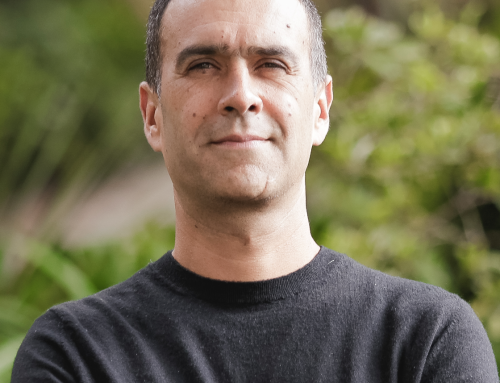
April 29 at 1:00PM UTC
The next installment of the monthly Funk Biogeography Seminar series will take place on April 29th! This month's speaker will be Dr. Damaris Zurell from the University of Potsdam. Click the button below to read more about the seminar topic and register!

Plus, a sneak peek for May's Funk seminar:

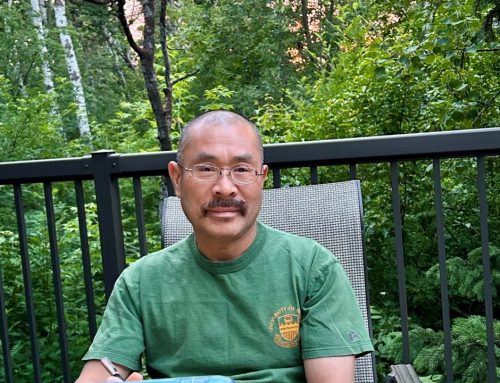
Michael Landis
Washington University in St. Louis

HIGHLIGHTED PAPER
Global biogeography of zoantharians indicates a weak genetic differentiation between the Atlantic and Indo-Pacific oceans, and distinct communities in tropical and temperate provinces.
Dr. Maria E. A. Santos - Postdoctoral fellow
Hawaiʻi Institute of Marine Biology, University of Hawaiʻi
About the study: "Our study revealed the biogeographical patterns of zoantharians, one group of colorful hexacorals, anemone-like creatures. By doing surveys in reefs across the world and an extensive literature review, we provided the first picture of their global distribution. We also discussed the sibling species complexes of closely related zoantharians between the Indo-Pacific and Atlantic oceans."

What do you consider to be the most significant finding of this study?
"While the Indo-Pacific typically hosts ten times the diversity of the Atlantic for most reef animals, our results showed that several genera and most families of zoantharians are cosmopolitan. This was remarkable and very different from the pattern known for reef fishes and stony corals."
What was the most surprising result?
"Our research found that the genetic and morphological divergence of species sibling complexes between oceans for zoantharians is surprisingly narrow. Their secret possibly lies in high dispersal via larval phase paired with an ability to raft, and an unusually slow evolutionary rate."
Why are you particularly interested in this groups of organisms?
"Due to their unique biogeographical patterns, zoantharians are an awesome model for studying marine evolution. Additionally, in habitats impacted by stress, some zoantharian species can outcompete stony corals. We are seeing 'phase shifts' where reefs once dominated by corals are being taken over by zoantharians. Understanding their distribution and dispersal modes will also help to forecast what the reefs of the future will look like. "
Parazoanthus axinellae, Wikimedia Commons.
What led you to this study, and did the direction of the project change as it progressed?
"During my first dive in Okinawa in 2015 (actually, the first time with my head underwater in the Indo-Pacific Ocean), I could observe a much higher diversity compared to my homeland, Brazil. In the midst of the numerous families and genera of fishes and stony corals found only in the Indo-Pacific, zoantharians drew my attention. They looked like the Brazilian ones! Even though I had previously read scientific publications with data from the Indo-Pacific, seeing the similarity between these species and their Atlantic counterparts was impressive: the same color patterns, size, and shape. Since then, along with collaborators from several countries, we started gathering data across the globe to understand the distribution of these fascinating coral reef animals. More recently, we expanded our analyses to include species from the deep-sea. "
What was the most challenging problem you had to solve?
"Zoantharia is still a relatively understudied group, and there are many knowledge gaps to be filled in the coming years. Because of this, we decided to evaluate their distribution only at higher taxonomic levels (genera and families)."
How does this work fit into your broader research interests?
"I’m broadly interested in understanding how ecological and evolutionary processes shape diversity. This project provided a foundation to biogeographical studies of Zoantharia, and more largely, shed light to the evolution of marine invertebrates."
How did this collaboration among the authors come about?
"It was a huge challenge to collect data across reefs worldwide and compilate literature data. This was only possible due to the team of authors that contributed with analyses and field surveys to conduct this work. "
What are you working on next?
"There are a couple of follow-up projects that I’m working on. I’m very interested in evaluating the genetic connectivity between populations of zoantharians at large scales. I’m also curious to examine deeper the ecology of the sibling species complexes: Do sibling zoantharians share similar niches?"

HIGHLIGHTED PAPER
Diverging responses of taxonomic, functional, and phylogenetic plant diversity to biogeographic parameters in arid habitat islands of southern Africa.
Alexander M. Bürger - PhD Student
Institute of Physical Geography, Goethe University Frankfurt
About the study: "We investigated quartz islands in the Pofadder region, one of the hottest and driest areas of South Africa. Using floristic surveys and functional trait measurements for 134 perennial species across 20 islands, we explored how biogeographic properties shape taxonomic, functional, and phylogenetic plant diversity. We found striking divergences: taxonomic diversity was driven by island area and shape complexity; functional diversity was primarily structured by island connectivity; and phylogenetic diversity was moderately influenced by the size of the nearest neighbouring island."

What do you consider to be the most significant finding of this study?
"That the three diversity dimensions are governed by fundamentally different biogeographic processes. This challenges the practice of using only richness as a proxy for overall biodiversity – and has direct conservation implications, as maintaining well-connected island networks appears just as critical as protecting large islands."
What was one of the most surprising results?
"That island connectivity, rather than area, was the strongest predictor of functional dispersion. We expected larger islands to support a wider range of functional strategies, but strong environmental filtering seems to decouple functional and taxonomic diversity. The results suggest that additional species on larger islands are functionally redundant rather than expanding the occupied trait space."
Why are you particularly interested in this groups of organisms?
"The quartz island flora is remarkably diverse for such an arid system – across just 20 islands we recorded 220 plant species. It contains fascinating dwarf succulents with extraordinary adaptations to extreme temperatures, radiation, and water scarcity. The combination of high diversity, endemism, and harsh conditions makes it a scientifically captivating and conservation-relevant system."
What led you to conduct this study?
"Quartz islands are a fascinating model system for edaphic habitat islands, found across different regions, biomes, and precipitation regimes – making them ideal for comparative biogeographic research. Beyond that, I have a personal connection to South Africa and a long-standing fascination with succulent plants."
The Knersvlakte region where the study was conducted. Wikimedia Commons.
What was the most challenging problem you had to solve?
"Trait measurements are extraordinarily labor-intensive – yet we successfully characterized 134 species representing more than 80% of all perennial species recorded. Furthermore, getting access to the privately owned land was not straightforward, as landowners are understandably cautious due to severe poaching problems affecting the rare succulent flora in this area."
How does this work fit into your broader research interests?
"As a botanist and biogeographer, this study sits at the heart of my research interests, combining plant functional ecology and biogeographic theory in a truly unique edaphic habitat island system."
How did this collaboration among the authors come about?
"I am a PhD student within the DFG-funded project "Quartz Islands II", the successor to "Quartz Islands I" – an established cooperation between Goethe University Frankfurt and the University of Hamburg, founded by my supervisors Severin Irl and Ute Schmiedel. The team combines complementary expertise in biogeography, plant ecology, and remote sensing."
What are you working on next?
"We will extend the study to additional quartz island archipelagos across South Africa, comparing functional diversity across a broad bioclimatic gradient – asking whether the same drivers operate consistently or if functional patterns diverge with regional climate and species pool differences."

Opportunities
Get involved with TIBS and find out about other opportunities in the world of biogeography!
  • We are looking for 5-8 people to serve on the TIBS Education Committee! Members across all career stages are welcome to join. Interested persons should contact Michelle Lawing (alawing@nulltamu.edu) for more information.
Interested in advertising something here?
Email keebler.8@nullosu.edu with details.

Looking for a place to share your work in biogeography?
PUBLISH WITH US!
Frontiers of Biogeography is the journal of
The International Biogeography Society.
All taxa and all branches
of biogeography are welcome.
Visit biogeography.pensoft.net
to view more articles!
International - Peer reviewed - Open access - 2.5 Impact factor
Check us out on: